

Carico della malattia ed esigenze non soddisfatte
Carico della malattia nel contesto della NF1-PN
Possibile impatto sulla vita quotidiana
I pazienti affetti da NF1-PN e i loro caregiver spesso affrontano una riduzione della qualità della vita che si estende oltre i sintomi fisici della patologia.
Questa complessa condizione può determinare una vasta gamma di limitazioni fisiche, psicologiche e cognitive che possono influire sul funzionamento quotidiano e sul benessere generale.1–3
Sintomi fisici
- Dolore
- Compromissione della mobilità
- Deturpazione
- Compromissione della vista
- Ostruzione delle vie aeree
- Compressione del midollo spinale
- Tumori che esercitano pressione sugli organi
Impatto psicologico
- Depressione
- Ansia
- Isolamento
- Stigma
- Imbarazzo
- Paura del tumore
- Compromissione della salute sessuale
Deficit cognitivi
- Incapacità di concentrarsi
- Compromissione della memoria
- Compromissione della funzione visiva e motoria
- Difficoltà di apprendimento
Dolore e deturpazione: preoccupazioni chiave a tutte le età
In tutte le fasce di età, due delle preoccupazioni più frequentemente segnalate tra i pazienti affetti da NF1-PN sono il potenziale dolore e i potenziali cambiamenti nell’aspetto fisico.3
Nei bambini e negli adolescenti, è stato riscontrato che il dolore influisce sulla qualità della loro vita, anche quando vengono utilizzati gli antidolorifici.4
NF1-PN: una sfida clinica complessa
Crescita e distribuzione del tumore
Il comportamento di crescita dei PN è imprevedibile, con periodi di rapida espansione alternati a fasi di relativa inattività.7
Gestione chirurgica: limitazioni ed esiti
Storicamente, l’opzione di trattamento primaria per i PN è stata la resezione chirurgica; tuttavia, i tumori non resecabili, le resezioni incomplete e la ricrescita tumorale possono limitare l’utilità degli interventi chirurgici.5
La chirurgia nell’ambito della NF1-PN è spesso limitata dalla natura infiltrativa dei tumori, dalla loro posizione anatomica e dalla loro vicinanza ai nervi e ai vasi sanguigni.2
Anche quando l’intervento chirurgico è fattibile:
- In molti casi non è possibile realizzare la rimozione completa di un neurofibroma plessiforme (PN).9
- Circa il 50% dei pazienti presenta tumori che non possono essere completamente resecati.10
- Anche dopo resezioni considerate complete, il 20% dei tumori può ricrescere.10
Esigenza di ulteriori opzioni terapeutiche
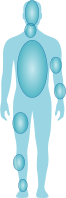
Sedi comuni dei PN5, 6
Riferimenti
- Copley-Merriman C, Yang X, Juniper M, et al. Natural History and Disease Burden of Neurofibromatosis Type 1 with Plexiform Neurofibromas: A Systematic Literature Review. Adolesc Health Med Ther. 2021;12:55-66.
- Fisher MJ, Blakeley JO, Weiss BD, et al. Management of neurofibromatosis type 1-associated plexiform neurofibromas. Neuro Oncol. 2022;24(11):1827-1844.
- Lai J-S, Jensen SE, Patel ZS, Listernick R, Charrow J. Using a qualitative approach to conceptualize concerns of patients with neurofibromatosis type 1 associated plexiform neurofibromas (pNF) across the lifespan. Am J Med Genet A. 2017;173(1):79-87.
- Wolters PL, Burns KM, Martin S, et al. Pain interference in youth with neurofibromatosis type 1 and plexiform neurofibromas and relation to disease severity, social-emotional functioning, and quality of life. Am J Med Genet A. 2015;167A(9):2103–2113.
- Prada CE, Rangwala FA, Martin LJ, et al. Pediatric plexiform neurofibromas: impact on morbidity and mortality in neurofibromatosis type 1. J. Pediatr. 2012; 160(3): 461–467.
- Darrigo LG Jr, Ferraz VEF, Cormedi MCV, et al. Epidemiological profile and clinical characteristics of 491 Brazilian patients with neurofibromatosis type 1. Brain Behav. 2022;12(6):e2599.
- Nguyen R, Dombi E, Widemann BC, et al. Epidemiological profile and clinical characteristics of 491 Brazilian patients with neurofibromatosis type 1. Orphanet J Rare Dis. 2012:7:75.
- Ejerskov C, Farholt S, Nielsen FSK, et al. Clinical characteristics and management of children and adults with neurofibromatosis type 1 and plexiform neurofibromas in Denmark: a nationwide study. Oncol Ther. 2023;11(1):97–110.
- Yang X, Desai K, Agrawal N, et al. Treatment, resource use and costs among pediatric patients with neurofibromatosis type 1 and plexiform neurofibromas. Pediatric Health Med Ther. 2020; 11: 421–428.
- Armstrong AE, Belzberg AJ, Crawford JR, et al. Treatment decisions and the use of MEK inhibitors for children with neurofibromatosis type 1-related plexiform neurofibromas. BMC Cancer. 2023;23(1):553.